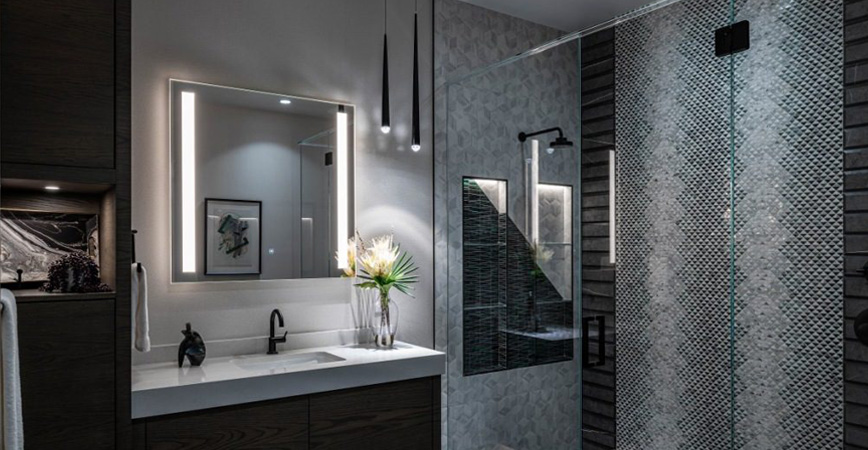
Tampa Bay has quietly become one of the country's hotter wellness markets. Medical spas, med-tech clinics, corporate wellness programs, and outpatient healthcare providers are expanding across the region at a pace that's hard to ignore — and increasingly, growth is being written directly into the region's skyline and site plans.
The wellness boom, by the numbers
Nationally, the wellness economy has kept climbing through 2026, with sustainability, personalization, and tech-driven health services pushing growth across nutrition, fitness, and personal care. Tampa Bay is riding that same wave, but with a few local accelerants:
- Population growth. Tampa Bay's rapid residential expansion — especially along corridors like U.S. 301 in South Hillsborough County — has created new pockets of demand for healthcare and wellness services close to where people live.
- Business relocation. Companies serving the wellness industry are choosing Tampa as a home base. WellnessLiving, a wellness-management software company, opened a regional headquarters in the Westshore District, citing Tampa's growing tech talent pool and quality of life.
- Med-spa and boutique wellness expansion. Local operators describe the med-spa segment specifically as growing around 15% annually, with some Tampa-area studio groups reporting even faster growth, fueled by demand for non-invasive treatments, GLP-1 programs, HydraFacial’s, and hormone therapies.
- Corporate and community wellness culture. Groups like the Wellness Council of Tampa Bay now run annual expos and corporate wellness events, a sign that wellness has moved from a consumer niche into mainstream business culture and employer benefits strategy.
Where construction and planning come in
None of this growth happens in a vacuum — it shows up as square footage, zoning applications, and capital budgets. A few ways construction and planning are shaping (and being shaped by) the wellness boom:
1. Medical office space is one of the most active property types in the region.
Outpatient medical office buildings are trading actively across Tampa Bay, with investors and healthcare systems competing for both new construction and "second-generation" space that already has clinical build-outs — imaging suites, specialized plumbing and electrical, and other costly infrastructure. That's pushing some providers toward retrofitting existing buildings rather than building from the ground up, since replicating clinical infrastructure in new construction takes more capital and a longer timeline.
2. New medical and wellness buildings are moving through permitting right now.
South Tampa has seen new two-story medical building proposals move through city review, and Riverview has delivered new medical office buildings anchored by major health systems, reflecting how development follows rooftops as residential growth pushes outward from the urban core.
3. Wellness is being built into mixed-use and downtown megaprojects, not just standalone clinics.
Some of Tampa Bay's largest current developments are weaving wellness amenities directly into their plans. Gallery Haus, a large mixed-use project near Tropicana Field, is planned to include hundreds of homes along with coworking space, retail, and wellness amenities. Downtown Tampa's riverfront tower project includes a spa alongside its hotel and residential components. This signals that wellness is no longer an afterthought amenity — it's becoming a planning anchor that developers use to differentiate large-scale projects.
4. Site selection and zoning decisions are being driven by clinical and demographic logic.
Providers are gravitating toward corridors with population growth and existing healthcare infrastructure, and hospital systems continue to be active buyers of both traditional and medical office buildings to expand their regional footprint. For planners and developers, that means wellness- and healthcare-related uses are increasingly a serious factor in land use decisions, not a secondary consideration.
It’s not just commercial — wellness is moving into the custom home too
The same demand for recovery, contrast therapy, and dedicated fitness space showing up in medical office buildings and mixed-use developments is showing up in single- family homes across Tampa Bay. Home builders and remodelers are increasingly fielding requests for wellness rooms as standard scope items, not novelty add-ons:
- Home saunas and steam rooms. Custom sauna builders now routinely frame dedicated rooms sized specifically for the client — typically in the 5×5 to 8×6 foot range for private residential jobs, though larger custom builds with glass corners and skylights are increasingly common. These aren't retrofits of an existing closet; they're purpose-built enclosures with the vapor barriers, ventilation, and electrical or wood-fired heat systems that a sauna actually needs to perform and last.
- Cold plunges. What used to be a stock tank filled with a garden hose has become its own construction category. Builders are now installing insulated, cedar-wrapped tubs with commercial-grade chillers, filtration, and circulation pumps — systems that need real plumbing, drainage, and electrical planning, not just a spot in the backyard.
- Purpose-built home gyms. Rather than converting a spare bedroom, more homeowners are asking builders to design gym spaces from the ground up: reinforced flooring for heavy equipment, higher ceiling heights for pull-up rigs and Olympic lifts, dedicated HVAC and ventilation to handle heat and humidity from workouts, mirrored walls, rubber flooring, and sometimes separate electrical circuits for larger cardio equipment.
- Contrast-therapy suites. A growing number of clients want sauna and cold plunge paired together as a single "hot-cold" wellness suite, which changes the planning math and means coordinating heat source, chiller placement, moisture control, and drainage all in one zone of the house rather than as separate afterthoughts.
For builders and remodelers, this shift matters because these spaces carry real technical requirements: proper vapor barriers and ventilation to prevent moisture damage in saunas and steam rooms, dedicated electrical circuits and sometimes 240V service for chillers and heaters, floor reinforcement and drainage for cold plunges, and slab or subfloor considerations for heavy home-gym equipment. Homeowners planning new builds or major remodels increasingly benefit from bringing these rooms into the design phase early — sizing the mechanical systems and structural support from day one — rather than trying to shoehorn wellness features into a general-purpose room later.
Commercial build-outs: yoga, pilates, barre, and recovery studios
Alongside medical office space and large mixed-use projects, a steadier stream of demand is coming from independent studio owners looking to open or expand a boutique fitness or recovery business. This is its own category of commercial construction, distinct from a standard retail build-out, because these spaces have specific mechanical, flooring, and layout needs:
- Yoga studio construction — sprung or cushioned flooring, mirrored walls, sound dampening, and HVAC systems sized for heated classes.
- Pilates studio build-outs — reformer bays with adequate spacing and floor anchoring, ceiling height for towers and springboards, and durable flooring that can handle equipment weight and movement.
- Barre studio construction — ballet barres properly anchored into wall studs or blocking, mirrored walls, and flooring that supports both barre work and mat-based segments.
- Hot yoga and hot mat Pilates studios are one of the more specialized build types: it requires commercial-grade heating and humidity systems, moisture- resistant flooring and wall finishes, upgraded ventilation and dehumidification, and often reinforced insulation to hold heat efficiently and protect the building envelope from sustained high humidity.
- Recovery studios and sauna/cold plunge lounges — commercial-scale saunas, steam rooms, cold plunge banks, and contrast-therapy suites, which need plumbing, drainage, electrical capacity, and ventilation well beyond what a typical commercial suite is built without the box.
For studio owners and operators, the build-out is often the make-or-break part of the business plan — a beautiful brand and class schedule doesn't matter if the flooring isn't rated for the equipment, the HVAC can't handle a room full of people in a heated class, or the sauna doesn't have the electrical capacity it needs. Bringing in a contractor experienced in this kind of custom commercial wellness construction early — during lease negotiation and space planning, not after the lease is signed — makes it far easier to confirm a space can actually support the buildout before committing to it.
How to prepare for it
Whether you're a developer, a business owner, a planner, or simply watching the market, here's how to position yourself for what's coming:
- Track corridor growth, not just downtown headlines. The biggest medical and wellness real estate activity right now is happening along growth corridors like U.S. 301 and in suburban submarkets — not only in the urban core. Watch where rooftops are going up, because wellness and medical space tend to follow.
- Understand the retrofit-vs-new-build economics. Because clinical infrastructure is expensive to replicate, buildings with existing medical improvements are commanding a premium. If you're a property owner, a building with imaging-ready electrical or plumbing may be worth more to a wellness or medical tenant than a comparable "vanilla" office space.
- Watch permitting timelines closely. Medical and wellness projects often involve extra review — civil engineering, stormwater management, and specialized life-safety requirements — that can extend timelines beyond a typical commercial build-out. Budgeting for that lead time up front avoids costly surprises.
- Think mixed-use, not single-use. If you're planning a larger development, wellness amenities (spas, fitness, coworking-adjacent wellness spaces) are increasingly expected as part of the package for residential and hospitality projects, not a bolt-on.
- Watch the regulatory side. Florida's medical spa and med-tech regulations continue to evolve as the industry grows; operators and developers alike should build in flexibility for changing licensing, staffing, and facility requirements.
- If you're opening a studio, vet the space before you sign the lease. Whether it's a yoga studio, Pilates or barre studio, hot mat Pilates room, or a recovery/sauna lounge, get a contractor to assess flooring, ceiling height, HVAC capacity, and electrical service against your specific buildout needs before committing to a location — it's far cheaper to walk away from a bad space than to retrofit one.
- If you're building or remodeling a home, design wellness rooms in from the start. Loop in your builder on saunas, steam rooms, cold plunges, or a real home gym during the design phase, not after framing is done — the electrical, plumbing, ventilation, and structural needs are very different from a standard bedroom or bonus room, and retrofitting them later is far more expensive.
- Engage early with economic development groups. Local organizations like the Tampa Bay Economic Development Council are actively courting wellness-adjacent companies, and their data can offer an early read on which submarkets are about to see the next wave of activity.
The bottom line
Tampa Bay's wellness boom isn't just a consumer trend — it's a real estate and construction story. As demand for medical, wellness, and preventive-care services grows alongside the region's population, the buildings, zoning decisions, and mixed-use master plans coming out of the ground today are effectively wellness infrastructure. Understanding that connection early — where the corridors are growing, which buildings already have clinical bones, and how permitting timelines work — is the difference between reacting to the boom and being positioned ahead of it.